


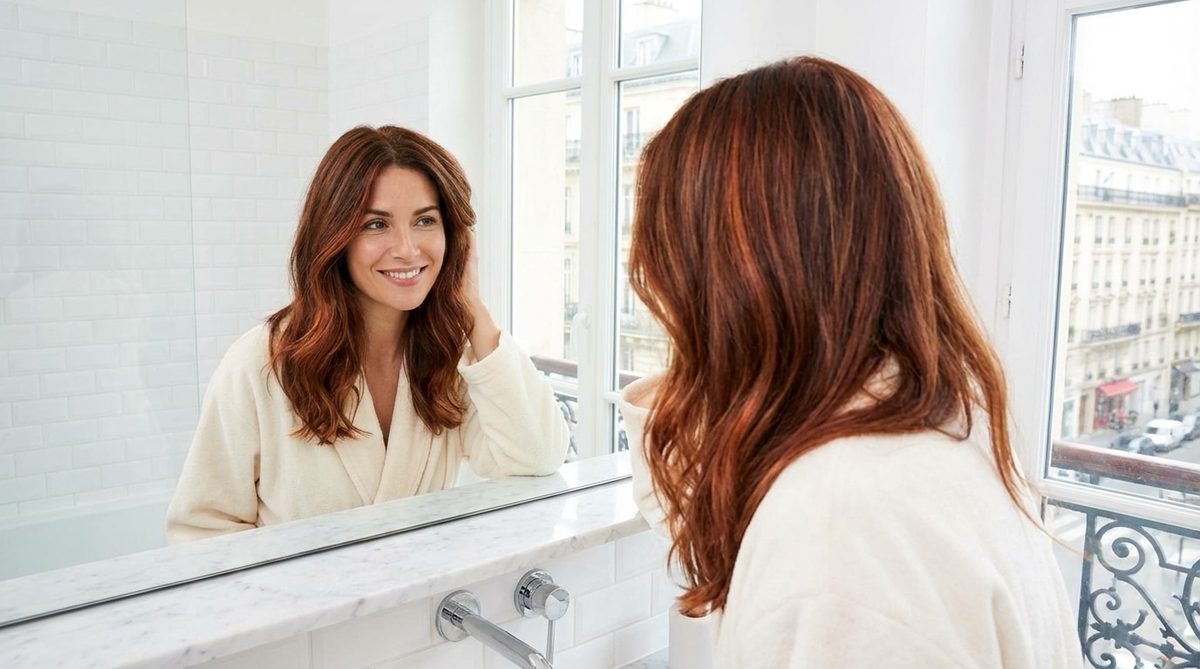
Finding that first silver strand in the mirror is a shock. It hits hard. Especially when you’ve spent years using chemical dyes to hide them. Those products promised to mask everything. They just left your hair brittle, dull, and fragile.
Now, the desire for natural beauty is taking over. The big question is: can you really cover grey roots while keeping your hair healthy? Yes. There is a method changing the game for women tired of damaged strands.
The Grey Hair Dilemma: Authenticity vs. Routine
Spring arrives. You pull on a light jacket. Then you look in the mirror. That one grey streak is back. It appeared overnight. Your reflection feels slightly off.
The immediate instinct is to reach for a box dye. But after years of application, the results are disappointing. Dry fibers. Split ends. A sensitive scalp. Traditional dyes claim miracles. Your hair pays the price for their failure.
Should you just let the greys show? Some women, like Sophie Fontanel, embrace the “French way” of letting it go. Most of us aren’t ready for that level of rebellion. We want a middle ground. Something kinder to our locks.
The Natural Revelation: The Power of Henna
Search for a healthy alternative online. You will keep seeing one word: henna.
This ancient powder has been used for centuries. It does more than just add color. It heals.
How does this millennial treasure fix damaged hair? The secret lies in how henna binds. It wraps the hair shaft in a pigment film. It does not penetrate the cortex. It does not alter the natural structure. The result? Zero dryness. Just durable, luminous color that respects your hair’s integrity.
Henna also offers rich, multi-dimensional reflections. The shade adapts to your natural base. You might get coppery highlights, deep browns, or warm auburn tones. It looks subtle. It looks real.
First Steps: Overcoming the Fear of Natural Color
Starting with henna can be intimidating. You might worry: Will it be too orange? Too flashy? Too alternative for my everyday look?
In France, henna has had a bad reputation. People associate it with radical DIY bio-hacks. That image is fading.
The benefits show up after the first use. No ammonia smell. No burning scalp. You simply mix the earthy powder with warm water. You apply it gently, strand by strand.
The texture feels unusual. The process requires patience. You leave it on for one to three hours. There are no bad odors. No tingling sensations. It is calm. It is safe.
Sublimated Strands: Unexpected Benefits of Henna
The effect goes beyond pigment. After rinsing, your hair feels denser. It feels stronger.
Why? The powder coats the fiber. It defends against external aggression. It acts like a strengthening mask combined with a shine treatment.
Forget the itchiness that follows chemical coloring. Henna rebalances the scalp. It soothes irritation. It leaves a feeling of lightness that lasts for days after application.
Practical Tips for Home Natural Coloring
Preparation is key. Avoid surprises. You do not need a colorist’s diploma. These simple steps make the difference.
Choosing the Right Henna for Your Base
Not all powders are the same. Pick based on your goals:
- Natural Henna (Lawsonia inermis) : Delivers coppery, bright, or red tones.
- Neutral Henna (Cassia) : Colorless but incredibly strengthening. Great for strengthening without changing shade.
- Indigo or Walnut : Creates natural browns. Mix with copper henna for chestnut or deep brown tones.
You can tweak the shade with ingredients. Add amla powder for darker tones. Chamomile infusion for brightness. A splash of vinegar or lemon juice to fix the color deeper.
Application Secrets: No Stains, No Stress
- Preparation amounts : Use about 100g of powder for a bob cut. Use 200g for long hair.
- Mixing : Combine henna with warm water. Never boiling. Aim for a smooth paste.
- Protection : Apply a dab of vegetable oil or thick cream along your hairline and roots. This prevents skin staining.
- Application : Wear gloves. Section your hair. Apply the paste methodically from roots to tips.
- Processing : Cover with a shower cap or plastic wrap. Keep the moisture in. Leave it on for at least an hour. Longer for deeper color.
- Rinsing : Rinse thoroughly with clear water. Do not shampoo immediately to seal the pigment.
For a flawless result, rinse meticulously. The thick cream at the hairline ensures no awkward lines. No bad surprises. Just healthy, colored hair.
It is not magic. It is chemistry, but the gentle kind. The wait is long. The payoff is a scalp that breathes and hair that shines. Whether you go for a copper glow or a deep brown, the structure holds up. The greys are covered. The damage stops.
And then you just wait for the next spring. And the next grey strand. The cycle continues. But the fear of the mirror? That is gone.
Why Your Gray Hair Disappears Without a Trace
The beauty of henna isn’t just that it covers gray hair. It’s that it hides it in plain sight.
Most chemical dyes draw a hard line. You see the regrowth. It’s stark. It’s stressful. Henna changes the game. The white strands blend into the new tone. There’s no visible root line. The transition happens slowly. Fluidly.
You stop fighting your roots.
How Henna Evolves Over Time
Color isn’t static with henna. It lives. It breathes.
With every application, the hue deepens. The nuances shift. Light catches the strands differently depending on how long you leave it on. The result is a living texture. It’s unique to your season. It never looks flat or artificial.
Maintenance is surprisingly low. A touch-up every four to six weeks does the job. The hair stays supple. The shine returns naturally.
In summer, you can stretch that gap. The regrowth is less obvious. The heat helps the color settle.
Common Mistakes to Avoid
Don’t rush in blind. Even natural products have rules.
Test first. Always. Pick a hidden strand. Apply the mix. Wait. See what happens. This is non-negotiable if you’ve used box dye before. Chemical residues react unpredictably.
Don’t mix timelines. Never apply henna right after a chemical color. The interaction can turn your hair kaki. Greenish. Brownish. Messy. Give your hair time to reset.
Watch the clock. Timing matters. Leave it too short? The tint is weak. Leave it too long? It turns copper. Intense. Maybe too intense for what you want. Stick to the recommended time.
Keeping the Color Alive
The right routine protects the investment.
Sulfate-free is key. Standard shampoos strip the pigment. They also dry out the scalp. Switch to a gentle, sulfate-free formula. It extends the life of the color.
Feed the strands. Henna coats. It doesn’t always penetrate deeply enough for heavy moisture. Use a nourishing mask. Coconut oil. Castor oil. Apply it regularly. The hair gains gloss. Strength.
Hydrate the dry stuff. If your hair is curly or dry, add a natural leave-in milk. It locks in elasticity. Keeps the frizz at bay.
Why Switch Now?
Choosing henna isn’t just about being eco-friendly. It’s about authenticity.
It’s about accepting the evolution of your hair. Whether it’s brown. Chestnut. Or delicately silver. It works with you. Not against you.
Spring is coming. Why not start fresh then?
The color settles. The hair feels different. Lighter.
You might just like the version of yourself that emerges.


