



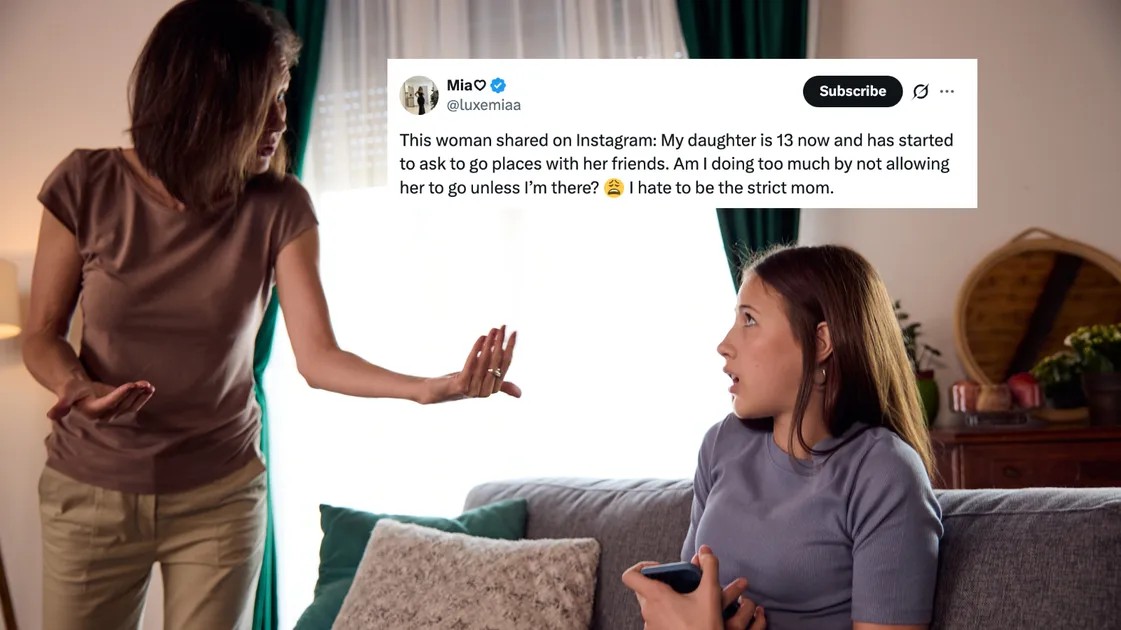
A recent viral exchange on X (formerly Twitter) has reignited a fundamental debate in modern parenting: How much freedom is too much?
The controversy began when a mother shared a screenshot of a text conversation with her 13-year-old daughter’s friend. When asked if the teen could go to the movies with a group, the mother responded that she would only allow it if she were present to supervise. The friend’s blunt response—“It’s ok she doesn’t have to go” —sparked a massive online discussion regarding the balance between safety and development.
The Great Generational Divide
The debate revealed a stark divide in parenting philosophies, largely shaped by the eras in which users were raised:
- The “Free-Range” Perspective: Many users pointed to the ’80s and ’90s, noting that children of that era often enjoyed significant autonomy—staying out until the streetlights came on—with minimal parental oversight.
- The “Helicopter” Concern: Critics of the mother’s approach argued that such high levels of supervision could stifle a child’s social development and agency.
- The Protective Stance: Conversely, some defenders of the mother argued that maturity levels vary wildly at age 13, and that in an unpredictable world, parental oversight is a necessary precaution.
What Experts Say: The Risk of Over-Parenting
While the internet remains divided, mental health professionals offer a more nuanced view. The consensus among psychologists is that independence is not a switch that flips at age 18; it is a skill that must be practiced.
Child therapist Jill Hartrich and psychotherapist Ciara Bogdanovic highlight several critical risks associated with “helicopter parenting” (highly controlled parenting):
- Stunted Identity Formation: Small, independent outings are essential for teens to figure out who they are outside of the family unit.
- Mental Health Risks: Excessive monitoring is linked to higher rates of anxiety, depression, and low self-esteem.
- Social Isolation: When parents restrict social milestones, teens may struggle to maintain peer relationships or feel “out of sync” with their social circles.
The Solution: “Scaffolding” Independence
Experts suggest that the goal shouldn’t be a choice between total freedom and total control, but rather a method called scaffolding. This involves providing structured, manageable opportunities for autonomy that gradually increase in complexity as the teen proves their competence.
How to implement scaffolding:
- Start Small: Instead of a full afternoon at a movie theater, begin with short trips, such as walking to a local store with a friend.
- Low-Stakes Practice: Use these small outings as “practice runs” for adulthood, allowing teens to practice problem-solving and risk assessment in safe environments.
- Leverage Technology: While the world feels more dangerous than it did decades ago, modern tools like smartphones and smartwatches allow parents to maintain a “digital safety net” without physically hovering.
“Teens need time to do ‘practice runs’ of adulthood in low stakes settings so they can develop the skills to problem solve, assess risk, and make safe choices.” — Ciara Bogdanovic, Psychotherapist
Conclusion
The tension between protecting a child and preparing them for the world is a natural part of parenting. By moving away from rigid control and toward a gradual, “scaffolded” approach to independence, parents can foster confident, capable adults while still managing their own legitimate anxieties.