




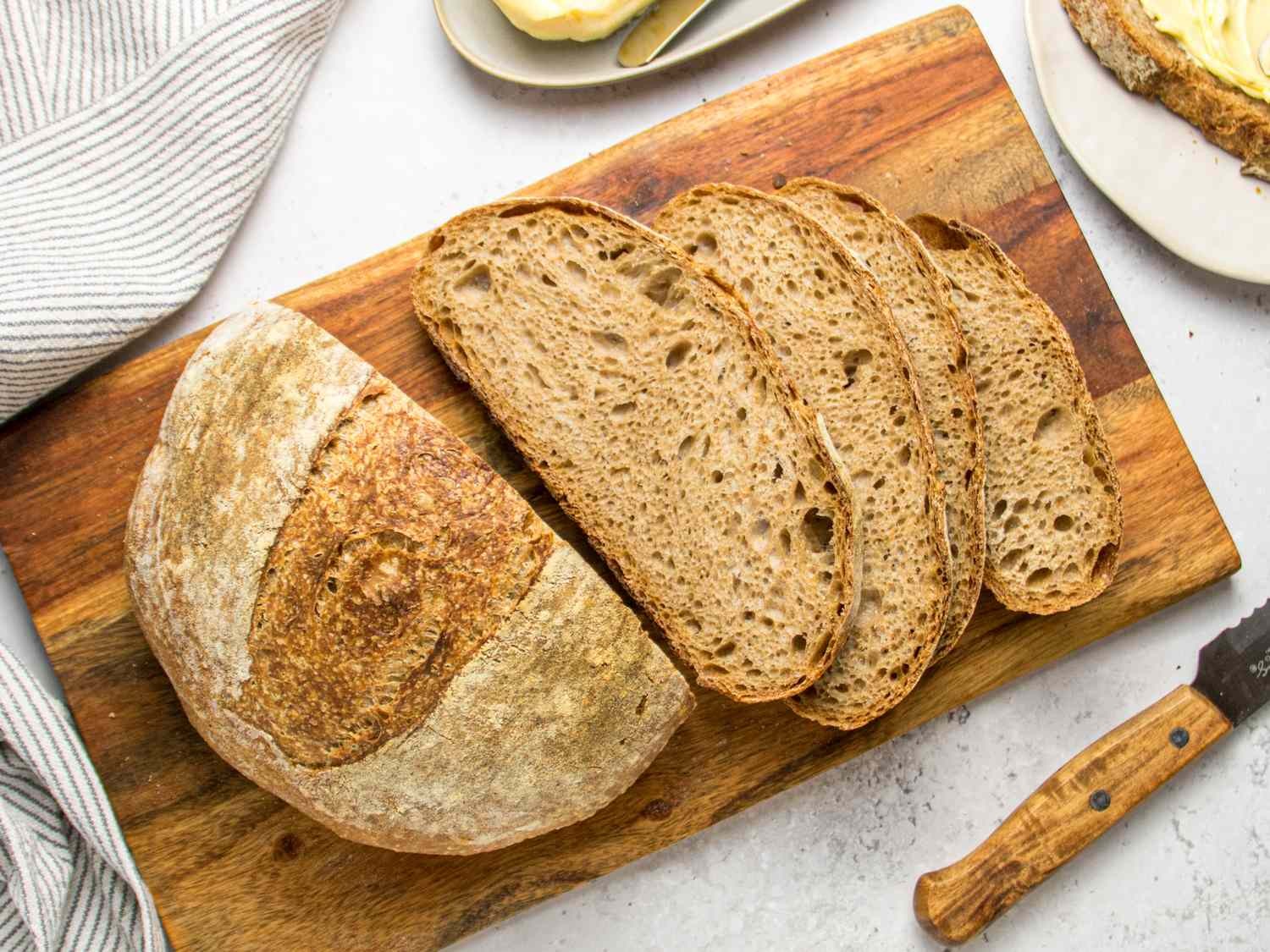
Many home bakers face a trade-off: convenience or quality. Store-bought bread lacks the rich, satisfying flavor of a freshly baked loaf, but traditional recipes demand time, effort, and often, a deep understanding of bread-making techniques. This recipe bridges that gap, offering a deeply flavorful whole wheat bread without the need for intensive kneading, starters, or constant attention.
The Problem with Whole Wheat
Whole wheat flour provides a robust, earthy flavor often missing in commercial breads. However, its bran and germ content interferes with gluten development – the protein network that gives bread its structure. This typically results in denser, drier loaves unless countered with advanced techniques like extended resting periods, high hydration, or mechanical kneading. Many home bakers simply avoid whole wheat altogether, but this recipe offers a solution without sacrificing convenience.
The key is balance: blending 55% bread flour with 45% whole wheat flour provides enough gluten strength for a light, airy texture while retaining the rich flavor of whole wheat. This ratio (9 ounces bread flour to 7 ounces whole wheat) is the foundation of this loaf’s success.
The Science of No-Knead Bread
This method doesn’t eliminate gluten development; it relies on time and fermentation instead of manual labor. When flour and water combine, enzymes initiate autolysis – a process where proteins become more flexible and bond more easily. Over hours, this naturally creates a strong gluten network without kneading.
Furthermore, the yeast produces carbon dioxide, inflating bubbles that gently stretch and align gluten strands. The slower fermentation, achieved with a minimal amount of instant yeast, reduces the risk of overproofing, making the recipe remarkably forgiving. This dough will wait for you, not the other way around.
The Dutch Oven Advantage
The final critical element is baking in a Dutch oven. This heavy pot mimics the conditions of a professional bread oven: intense, even heat and trapped steam. The thick walls store thermal energy, ensuring rapid oven spring (the initial rise in the oven) before the crust sets. The trapped steam keeps the surface flexible longer, allowing the loaf to expand fully.
Unlike traditional methods that require spritzing water or tossing ice into the oven, the Dutch oven creates its own steamy environment. This results in a thin, crisp, crackly crust rather than a dull, tough one. Importantly, this recipe does not require preheating the Dutch oven – reducing the risk of burns. Always ensure your Dutch oven has a heatproof knob before baking.
The Recipe: Effortless Flavor
This method is not revolutionary, but the combination of these techniques delivers a superior loaf with minimal effort. It’s a practical solution for those who want homemade bread without making bread their life’s work.
Ultimately, this recipe provides a satisfying balance between flavor, texture, and convenience. It’s a reminder that great bread doesn’t require perfection, just a little understanding of the science behind it.