
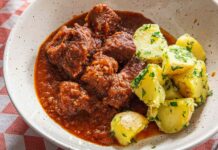

Goulash, as a dish, has evolved far beyond its Hungarian origins. Today, it represents a spectrum of stews and braises, unified by meat and paprika but otherwise open to interpretation. This recipe focuses on Saftgulasch —”saucy goulash”—a Viennese adaptation known for its rich sauce and subtle flavors. The connection to Austria matters because the region was once part of the Austro-Hungarian Empire, where culinary influences moved freely.
This style of goulash isn’t about bold, complex flavors; it’s about a slow, warming experience. It relies on a generous base of onions and restrained seasoning, creating a stew that’s deeply satisfying in its simplicity. The key is a juicy, tender beef in a thick, flavorful sauce.
Selecting the Right Cut of Beef
The foundation of any great stew is the meat. Tougher cuts with high collagen content are ideal: as they simmer, the collagen breaks down into gelatin, yielding incredibly tender results. Beef chuck is the most affordable and reliable option, though boneless short ribs also work well (at a higher cost). The goal is fork-tender beef, not dry, shredded meat. Simmering for around two hours is usually sufficient; overcooking will ruin the texture.
Browning for Maximum Flavor, Strategically
Browning beef enhances flavor through the Maillard reaction, creating roasty, meaty notes. However, aggressive searing can also dry out the meat. The solution is to brown only half of the beef, preserving moisture in the other half while still developing depth of flavor. This approach balances flavor complexity with tenderness.
Onions: The Secret to Thickness and Speed
Onions are crucial, both for flavor and thickening the sauce. Many recipes call for long sautéing or even blending, but there’s a shortcut: add a pinch of baking soda. This accelerates browning and softens the onions faster by raising the pH. While baking soda can ruin caramelized onions on their own, it works well here, ensuring the onions melt into the stew without excessive effort.
Spices: Earthy Warmth, Not Heat
The seasoning is restrained. Hungarian sweet paprika provides an earthy warmth without overpowering the beef and onions. A touch of hot paprika is optional. Some cooks add marjoram and caraway, which enhance the stew’s complexity. Dried marjoram is preferred, as fresh can be too assertive. Adding these spices with a small amount of tomato paste allows them to fry briefly in the fat, infusing their flavors before the beef and broth are added.
Serving: Simple is Best
Serve the finished goulash with a splash of cider vinegar to brighten the flavors. Hearty brown bread, boiled potatoes, or buttered egg noodles are traditional accompaniments. Austrian dumplings (knödel ) also pair well. But ultimately, this stew speaks for itself; complex garnishes aren’t needed.
This goulash isn’t about fireworks; it’s about quiet comfort. It’s a dish meant to be savored slowly, letting the deep flavors and tender beef warm you from the inside out.