



Macaroni and cheese is often viewed through two lenses: either as a nostalgic, rich holiday staple or a quick, utilitarian meal for those on a budget. However, by applying culinary techniques used in traditional Mexican flavors, this classic dish can be transformed from simple comfort food into a complex, multi-layered gastronomic experience.
This elevated version moves away from the standard heavy cheese sauce, opting instead for a profile defined by acidity, smoke, and layered heat.
The Foundation: Charred Salsa Verde Sauce
The secret to preventing a cheese sauce from feeling heavy or “flat” lies in balance. While traditional recipes rely solely on dairy, this version uses a broiled salsa verde to introduce brightness and depth.
- The Technique: By charring tomatillos, onions, serrano peppers, and garlic under high heat, the raw, sharp bite of the vegetables is mellowed into a smoky complexity.
- The Science of Flavor: The natural acidity of the tomatillos acts as a counterweight to the fats in the cream and cheese.
- Texture Control: Simmering the blended salsa in butter before adding dairy is a crucial step; it evaporates excess moisture, ensuring the sauce is thick enough to cling to the pasta rather than settling at the bottom of the dish.
The sauce is completed with a blend of Parmigiano-Reggiano and Fontina, creating a smooth, emulsified base that balances the vibrant salsa.
Layers of Heat: Managing the Spice
A common challenge in rich, dairy-heavy dishes is that the fat in the cheese can “mask” spice. To combat this, this recipe utilizes a stratified approach to heat, ensuring spiciness is felt throughout the palate without being overwhelming.
- Fresh Heat: The serrano peppers in the salsa verde provide a bright, immediate kick.
- Dried Heat: The topping introduces a different dimension of spice using ground chiles.
Chef’s Note on Chiles: When selecting dried chiles for the topping, texture matters. Use chiles de árbol for an assertive, sharp heat. If a milder profile is desired, opt for guajillo or cascabel chiles. Avoid raisin-like chiles like ancho or pasilla, as they tend to clump rather than provide a clean, even grind.
Texture and Finish: The Triple-Layer Experience
A successful baked pasta relies on a contrast of textures. This recipe achieves this through three distinct layers:
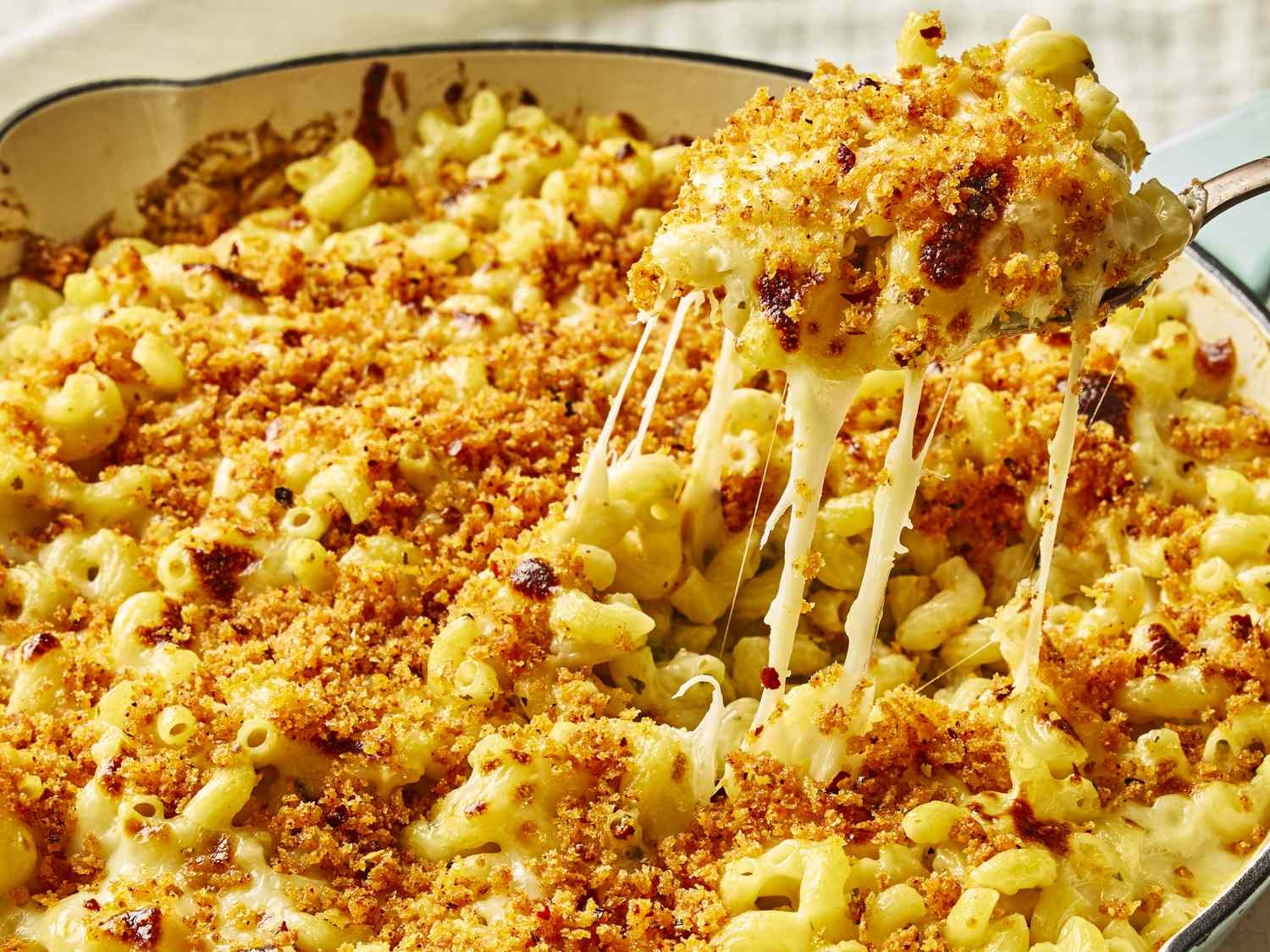
- The Creamy Core: Tender macaroni enveloped in the emulsified salsa-cheese sauce.
- The Stretchy Crust: A generous layer of queso Oaxaca or mozzarella is broiled until blistered. This creates a “pull” similar to a pizza or quesadilla, adding structural integrity to the dish.
- The Crunchy Cap: Panko breadcrumbs toasted in oil with ground chiles provide a nutty, crispy finish that prevents the dish from feeling overly soft.
Conclusion
By integrating charred salsa verde and spiced breadcrumbs, this recipe reimagines macaroni and cheese as a sophisticated fusion dish. It moves beyond simple comfort, offering a sophisticated balance of smoke, cream, and heat.