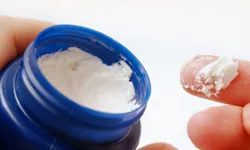
You pick up a jar of face cream and promise yourself you’ll read the label this time. The marketing copy screams anti-aging, wrinkle reduction, and cellular regeneration. The formulas are complex, sure, but the ingredient list is legally required to be transparent. So you squint. And you blink.
Because sometimes you find things that make you pause.
Human breast milk? Chicken bone marrow? Sure. But those are just the polite ones. Our ancestors didn’t have dermatologists, so they used what was around. Rose oil. Mud. Honey. Kiwi. These are the “normal” historical holdovers. But geography dictates availability. Regions used what they could get their hands on. Some of those oddities survived the centuries. They crossed oceans. They made it to your bathroom counter.
Here is the reality of what some of these ingredients actually are.
The Controversy of Placenta
Let’s start with the uterus lining. It’s expelled during childbirth. That is the placenta.
In the 1940s, the US market went wild for it. Companies claimed it removed wrinkles and kickstarted tissue growth. The FDA looked at the data and said no. The products were declared ineffective. The claims were illegal.
Placenta is protein. It is a good source of it. But protein in a jar does not magically make skin younger. It’s no better than other proteins for your complexion.
Modern cosmetic placenta is different, though. It is washed. Processed. Multiple times. The goal is safety. Binding agents in the formula keep bacteria at bay. It is now FDA-approved for use in cosmetics. That is why you still see it on shelves. It is popular. It is just not a miracle worker.
The Price of Ambergris
Then there is the smell.
Not your perfume. The ocean’s scent.
Ambergris is a waxy substance produced in the digestive system of sperm whales. It is technically vomit. Or rather, a secretion from the intestines that is often expelled. It floats in the ocean for years. Sunlight and saltwater oxidize it. The raw, foul smell fades. It develops a sweet, earthy scent.
Perfumers love it. It acts as a fixative. It makes fragrances last longer on the skin.
It is rare. It is expensive. A single kilogram can sell for tens of thousands of dollars.
You will not find whole chunks of whale vomit in your moisturizer. You will find it listed as ambergris on the label. It is used in high-end perfumes and some luxury skincare products for its scent profile and preservative qualities.
It raises an ethical question. Are you buying cruelty-free if the whale died naturally? Or if it was harvested from a beach? The sourcing is murky. The price tag is clear.
The Silk Road to Your Skin
Silk is fabric. But silk protein? That is a powder.
It is hydrolyzed. Broken down into tiny amino acids. These smaller molecules can penetrate the skin barrier. They claim to hydrate. To smooth.
It sounds like science fiction. It is just chemistry.
Ancient cultures used silk for clothing. They valued it. They traded it. Now, cosmetic chemists


It sounds like a prank. A dark joke told to scare you away from the cosmetics aisle. But the claim that whale vomit is a staple ingredient in high-end beauty products is undeniably true. The substance, better known as ambergris, is a flammable, waxy substance found in the digestive tract of sperm whales. For centuries it has not been harvested for its origin, but for its usefulness as a fixative for perfumes.
The fixing agent slows down the evaporation of fragrance oils, so your fragrance stays on your skin longer. Because ambergris is so hard to find and even harder to identify, the market drives up prices. Usually it’s around $10 per gram. If you find a piece that weighs 100 pounds or more, you’re not just keeping a rock; you are holding a small fortune. This rarity is exactly why it ends up in your expensive face cream or your own eau de parfum.
Geisha facial and uric acid
If you look across the Pacific Ocean, you’ll find a tradition with equally murky roots. Japanese geishas were respected entertainers, masters of music, dance and conversation. Their influence continues to influence modern Western culture. The New York salon now offers a “Geisha Facial” for $180. The treatment lasts about an hour. Your face is gently applied with uguisu no fun paste.
This is Japanese and means powdered bird droppings.
The main ingredient is uric acid. Proponents believe it works wonders for the skin. When you see a Geisha’s flawless porcelain skin, the logic applies. You may hesitate, but the results speak for themselves. The skin care industry has long relied on nature’s nastier byproducts.
Cow dung: ancient exfoliation
That brings us to cow dung. It sounds absurd. It smells worse. But in many parts of the world, especially in South Asia, cow dung has been used for thousands of years. It’s not just fertilizer. It’s a household cleaner. It is a source of fuel. And yes, it is skin care.
The manure is dried and ground into a fine powder. This powder is then mixed with herbs and spices to form a paste. The paste is applied to the face as a mask. It acts as a gentle exfoliator. It removes impurities. It cools the skin. In traditional Ayurvedic medicine, it is said to have antibacterial and antifungal properties. Modern science is still catching up on these ancient practices, but the principle remains simple. Nature offers solutions, even if they are not always beautiful.
The beauty industry thrives on innovations. It takes the weird, wild and wonderful and repackages it for your dressing table. Ambergris. Bird droppings. Cow dung. These are not modern inventions. They are timeless medicines dressed up in luxury prices. You pay for the brand. You pay for the ritual. You pay for the promise of better skin.
But the question remains. How much of the “natural” natural beauty is just a marketing version of something that was once just… garbage?

Turning Waste Into Vanilla-Scented Cosmetics
The idea that cow manure could eventually smell like high-end vanilla might make you gag, but the science is sound. Researchers in Japan have cracked the code on turning bovine waste into vanillin, the primary flavor and scent component of vanilla beans. The process is straightforward if you ignore the source material: they apply specific heat and pressure to the manure, breaking it down into the desired compound.
Here is the catch. You are not buying vanilla-scented ice cream anytime soon. The extract is deemed unsafe for consumption. However, the beauty industry is lining up. The plan is to use this recycled ingredient in cosmetics, soaps, and shampoos. It is a win for sustainability and your wallet. Producing vanillin from dung costs less than half of extracting it from actual vanilla beans. The team is still refining the method, aiming for commercial release around 2010. It is essentially a recycling loop that smells like dessert.
The Spermine Moisturizer Boom
Then there is the other ingredient you probably didn’t expect to see in your moisturizer: semen. Yes, really. Several companies are marketing creams infused with this bodily fluid, specifically leveraging its antioxidant content.
The star compound is spermine. A Scandinavian firm, Skinscience, has built a line of products around it. They claim spermine is an antioxidant 30 times stronger than Vitamin E. That is a bold claim. The marketing pitch suggests these creams can do everything from deep hydration to healing sunburns. It is not just for the face, either. Some hair salons are using bull semen treatments to add shine to dry locks.
If you are skeptical, you are not alone. But the market exists. A company called Cmen Beauty Now delivers the product discreetly to your door. Their protocol involves monthly testing of donors to ensure the “quality and safety” of the moisturizer. It is bizarre, yes. But if the antioxidant power is real, the hype might hold water.
Why We Are Obsessed With the Unconventional
We tend to associate beauty with purity. Clean ingredients. Natural extracts. But the industry is increasingly looking at unconventional sources for high-performance compounds. Whether it is waste product or bodily fluid, the bottom line is efficacy.
- Cost efficiency: Synthetic or waste-derived alternatives are often cheaper than harvesting rare natural ingredients.
- Potency: Compounds like spermine offer high antioxidant strength that standard Vitamin E cannot match.
- Sustainability: Recycling manure into fragrance reduces the environmental footprint of vanilla farming.
The question is not whether these ingredients work. It is whether we can get past the initial recoil. Once the novelty fades, the results will speak for themselves. Or they won’t. The beauty industry thrives on the new, the strange, and the slightly unsettling. Until then, keep your eye on the label, not the source.