



My grandmother did it every single day. Just before draining the spaghetti, she’d ladle a cup of cloudy cooking liquid into a bowl. We all thought it was weird waste. We’d stare at the milky water like it was dirty dishwater, ready to pour it down the sink.
But she saved it.
That liquid is the difference between a sauce that slides off your pasta and one that clings. It isn’t heavy cream. It isn’t some expensive emulsifier from a gourmet store. It’s just pasta water. And it’s the only ingredient that truly matters.
What Actually Is This Cloudy Liquid?
It’s not just water. Not anymore.
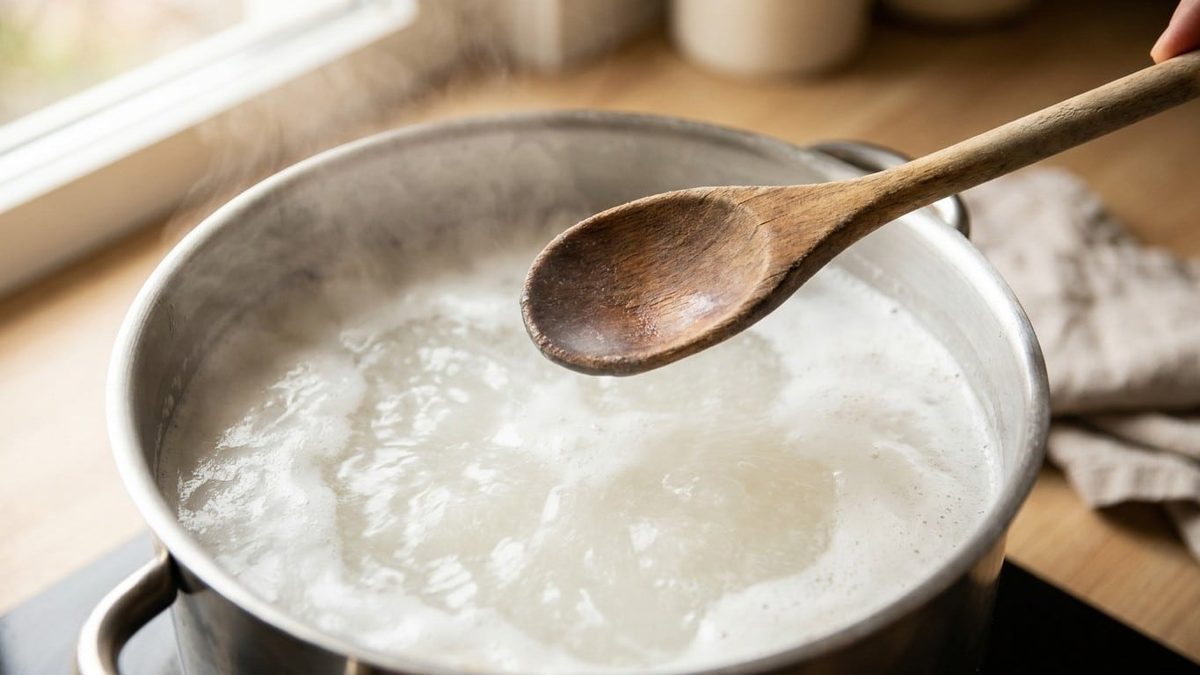
For decades, Italian cooks relied on instinct. They knew the result worked but didn’t know why. Modern food science finally caught up. When you boil pasta, the starch granules inside the noodles swell up. Heat makes them burst. They release amylose and amylopectin into the boiling water.
That cloudy look you see? It’s starch.
Abbey Thiel, a food scientist, calls this water an “functional ingredient.” It’s far more than salted H2O. The starch molecules act like microscopic shields. They wrap around fat droplets. This stops oil and water from separating. It’s the same chemical process that creates mayonnaise or hollandaise sauce. You just need the starch to do the heavy lifting instead of egg yolks.
The result is a natural emulsion. Thick. Glossy. Stable.
Why Your Sauce Slides Away (And How to Fix It)
Ever serve spaghetti only to find a pool of red oil at the bottom of the bowl ten seconds later? Your noodles are dry. The sauce is gone.
This happens with light, oil-based sauces. Think aglio e olio. Without an emulsifier, the oil separates. It sinks. The pasta stays naked.
Pasta water fixes this instantly. The starch bridges the gap between the oil and the water phases. It binds everything together. The sauce coats the noodle instead of pooling beneath it.
Daniel Gritzer, editorial director of Serious Eats, tested this. He wanted to see if the old trick held up under scientific scrutiny. He had tasters compare three methods:
- Pasta tossed with sauce only.
- Pasta mixed with sauce.
- Pasta finished in the pan with pasta water.
The third option won. Every time.
He went further. He made minimalist olive oil sauces using three types of liquid: high-starch water, medium-starch water, and plain tap water. The high-starch version created the best emulsion. The texture was superior. The adherence was real.
“The starch acts as a molecular mediator.”
It’s a simple shift in habit. Save the water. Use it. Stop throwing away the magic.
You might wonder if this works for every dish. It does for emulsified sauces. It doesn’t help with heavy cream reductions. But for the vast majority of quick weeknight meals? It’s the game changer.
Stop fearing the cloudy water. Embrace it. Your sauce will thank you. Or it won’t. And you’ll still end up with a bowl of dry pasta and oil. The choice is yours.
Why Saving Pasta Water Is the Secret to Creamy, Restaurant-Quality Meals
The trick isn’t magic. It’s just timing.
You have to pull the water before you drain the pot. Once those strands hit the colander, the game is over. The water evaporates. The starch settles. You miss your chance.
Keep a mug or small bowl nearby. Scoop out about 150 to 200 ml of that hot, cloudy liquid right before you tip the pasta into the drain.
Cloudy is good. That milky color isn’t dirt. It’s concentrated starch. If you want it thicker, use less water than usual. The standard rule is a liter for 100 grams of pasta, but some chefs deliberately cut back on the liquid to force the starch to concentrate.
The Science of Mantecatura
When you start building your sauce, add that pasta water gradually.
Whisk hard. Keep the heat low so eggs don’t scramble instantly and your emulsion doesn’t break. But don’t go crazy with the liquid. Too much water dilutes the flavor. It makes the dish watery and sad. The goal isn’t to add volume. It’s to bind.
It’s a subtle balance.
In Italy, they call this mantecatura. It’s the art of marrying pasta and sauce until the starch, heat, and motion create a silky coating. It’s not just pouring liquid into a pan. It’s active choreography.
You transfer the pasta while it’s still slightly al dente into the hot pan with your sauce. Add a splash of that starchy water. Toss it over high heat for one or two minutes. The pasta finishes cooking, absorbing the sauce directly.
Sauces That Need This Trick Most
Carbonara is the prime example.
Traditionally, the cooking water mixes with eggs, pecorino, and guanciale to create that velvety cream. No heavy cream needed. This is why authentic Roman carbonara never had a drop of fresh cream. It’s why the version your grandmother made was richer than the watery imitations you get at train station trattorias.
It works best with butter and olive oil sauces. The starch and moisture create an emulsion that clings perfectly. Tomato or cream sauces don’t need it as badly, but it still helps marry flavors and prevents the plate from drying out.
There’s a bonus here too. That water is already salted. You can adjust the seasoning of your sauce without adding more salt. Two benefits for the price of one scoop.
And if you’re in the habit of rinsing your cooked pasta under cold water, stop. You’re washing away flavor and texture. You’re destroying the surface starch that helps the sauce stick. That residual starch acts as a protective layer.
Science caught up to the grandmother’s instinct decades later. Gluten-free pasta made from corn, rice, or chickpeas also releases starch. The water might look slightly different, but it still acts as a powerful emulsifier.
This isn’t just for durum wheat spaghetti. It works for almost any pasta you boil.
Sources : sciencepost.fr | planetezerodechet.fr