


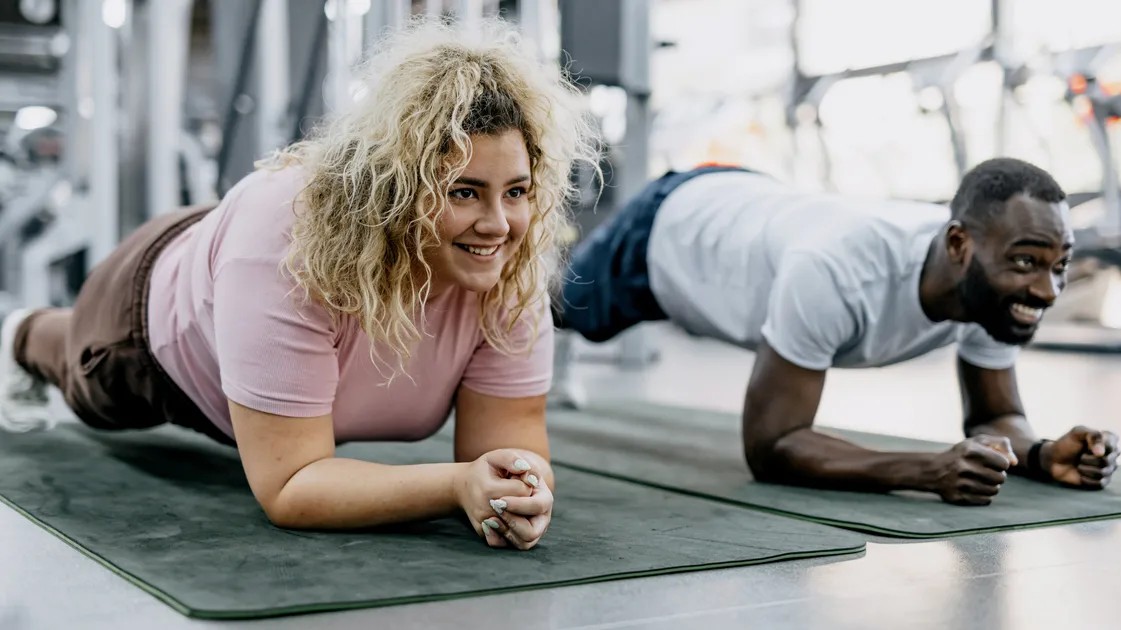
Most people think gyms are temples of perfection. They aren’t. They are mostly filled with regular people trying not to cry during squats.
If you have ever felt intimidated walking through those sliding glass doors, or if you’ve been grinding for years but feeling no different, listen. We asked pros what actually matters. The answer? Less is more.
Show Up. That’s It.
You do not need a two-hour session. You don’t need a plan printed in Arial font and laminated.
Thomas Banicky at 24 Hour Fitness says it straight: consistency beats perfection. Always. You can fail the workout plan. Just do some movement. Twenty minutes is better than zero. Denise Chakoian notes that folks often think exercise is all-or-nothing. If they can’t find six hours, they find none.
Stop it.
Progress happens in the boring middle. April Medrano points out that real results aren’t loud. They aren’t dramatic. They are showing up week after week to lift the same thing, slightly heavier. It is unglamorous. It works.
The magic is in the repetition, not the transformation.
Slow Down
Society wants instant results. Your body says no.
Mallory Fox breaks it down simply. Four weeks to feel better. Four months to look different. That feels slow. It should. Your tissue doesn’t upgrade on a sprint timeline. If you rush, you break. Or you quit.
And forget the pump. Josh Schlottman says chasing the “burn” is a trap. Soreness proves you tried. It proves nothing about growth. If the weight on the bar is the same as it was six months ago, you aren’t building muscle. You’re just suffering nicely.
Is suffering productive? Sometimes. Usually, it is just inefficient.
Intensity Is Overrated
The hardest workout isn’t always the best one.
Antonietta Vicario warns that chasing exhaustion without mobility leads to compensation. You injure yourself. Then you quit. Karen Lord Pilates adds that fitness should serve you for decades. Not just this quarter. If you are too wrecked to function, you failed.
Aim for better movement. Aim to want to come back tomorrow.
Fitness isn’t about punishment. It is about longevity.
The Gym Is Only One Part
You cannot out-train your bad night. Or your stress. Or your poor diet.
Schlottman says stress literally doubles recovery time. It doubles injury risk. Sleep matters. David J. Sautter mentions daily steps. Hydration. These small things dwarf your hour of cardio in impact. If you walk five miles and sleep seven hours, you will beat the guy who deadlifts five hundred pounds while stressed and awake since Tuesday.
Sound harsh? It’s biology.
No One Is Watching You
You feel eyes on your back. You don’t see anyone on you.
Tara De Leon says everyone is focused on themselves. Kat Pasle-Green agrees. People respect effort. They don’t critique form unless you are dropping plates on their head. You are the protagonist in your head. You are a background character to everyone else.
Use that. Be invisible. Get your work done.
Assume Less
Don’t assume the person lifting light is there to lose weight.
Maybe they are fighting cancer. Maybe they are rehabbing a knee. Maybe they just like feeling strong. De Leon shared a story about a client with cancer. People asked her how she lost so much weight. She replied: “Cancer.” She would rather be alive and fat than thin and dying.
Joshua King reminds us that the overweight person might have already dropped eighty pounds. The elder might just want to play with grandkids. Don’t project your insecurities onto others. They are not you.
Basic Human decency
Wipe the bench.
Kelsey Holgate says visible sweat is gross. It’s unhygienic. Put the weight back on the rack. It isn’t rocket science.
And stop scrolling on your phone between sets. Medrano says let someone else use the machine while you rest. Resting doesn’t require Instagram. It requires breathing.
Respect the shared space. Or don’t come.
Warm Up. Rest.
Skipping the warm-up is how you start rehab careers.
Holgate insists on movement patterns. Not just running on a treadmill for three minutes. Activate the muscles you are about to use.
Banicky emphasizes that recovery is training. Muscles don’t grow in the gym. They grow in bed. Adaptation happens when you stop. Feeling guilty about rest days is stupid. You are paying your body back for the stress you put it under.
Ask For Help
It’s not weakness. It’s leverage.
You can wander the gym floor forever and guess at form. Or you can ask a trainer. Medrano says we are there to help. No shame in not knowing.
A few sessions can change how you move for life. Safety improves. Results improve. Confidence goes up.
Why suffer alone when you could just ask?