
Diet culture isn’t just a trend in the U.S. It’s the background noise of daily life. You scroll past it on social media, hear it at the water cooler, and see it plastered on cereal boxes. Atkins. Cabbage Soup. South Beach. The Zone. Scarsdale. Hollywood Miracle. You know these names because they are everywhere. They promise shortcuts to a slimmer silhouette, yet for most people, the scale seems to creep upward regardless of which label you follow.
Before we can talk about losing weight, we have to understand why gaining it feels so effortless. The culprit isn’t just your lack of willpower. It’s biology. Your body is engineered for survival, not for fitting into skinny jeans.
The Surprising Math of Metabolic Efficiency
Have you ever wondered why weight gain becomes a default setting after 30? It’s easy to blame metabolism slowdowns, but the real issue is efficiency. Your body is remarkably frugal. It doesn’t waste energy. It hoards it.
At rest, your body burns approximately 12 calories per pound of body weight each day. Let’s look at the numbers. If you weigh 150 pounds, you’re burning roughly 1,800 calories just to exist. That’s it. No movement required.
Those 1,800 calories fuel the invisible machinery of life:
- Keeping your heart beating
- Pumping blood through your veins
- Regulating your body temperature
- Running your brain and internal organs
It’s not glamorous. It’s fundamental. And it costs very little energy.
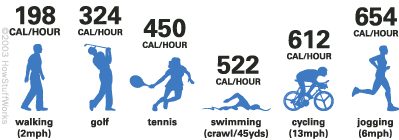
Now, add exercise to the mix. You might think a long run burns a massive amount of fuel. Think again. A marathon runner covering 26 miles burns only about 2,600 calories total. That’s roughly 100 calories per mile.
Compare that to your car. A typical American vehicle gets between 15 and 30 miles per gallon. A gallon of gasoline contains about 31,000 calories. If a human could drink gas, you could run 26 miles on just 0.3 liters (one-twelfth of a gallon). In fuel economy terms, a human gets over 300 miles per gallon. On a bicycle? You could hit 1,000 miles per gallon.
We are biologically more efficient than most cars. This efficiency is a feature, not a bug. It kept our ancestors alive during famines. But in a world of constant food access, that same efficiency makes gaining weight almost inevitable if we aren’t careful.
Taking Calories In
The equation is simple, even if the execution is hard. You have a baseline burn rate. You have a burn rate from activity. Then there is input. When input exceeds output, the surplus is stored. Not as heat. Not as wasted energy. As fat.
Understanding this mechanical reality changes the conversation. It’s not about punishing yourself for being “inefficient.” It’s about working with a system that is designed to hold on to every available calorie. Once you see the math, the advice shifts from vague “eat less” directives to concrete strategies for managing that balance.

The calorie math of fast food
Sitting still, your body burns roughly 1,800 calories a day. That number feels generous until you order lunch.
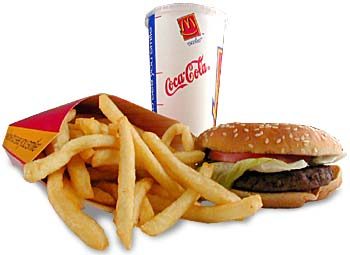
Go to a local McDonald’s. Order the Big Xtra meal. A sandwich, large fries, large Coke. The math adds up fast.
- Sandwich: 710 calories
- Fries: 540 calories
- Drink: 310 calories
Total: 1,560 calories.
That is almost your entire daily allowance gone before 2 PM. Add a McFlurry. 630 more calories. You hit 2,200. You’ve overspent for the day in one sitting.
It’s the same story at Pizza Hut. A Meat Lover’s Pan Pizza slice is 360 calories. Three slices plus a large drink equals 1,390 calories. You are 410 calories short of your full day’s limit.
Where does the rest of your day go? Breakfast? Dinner? Snacks? The deficit disappears quickly. Or the weight stays.
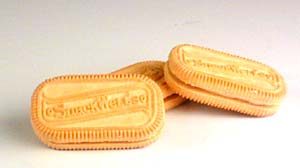

You can eat twelve SnackWell’s Creme Sandwich cookies without even thinking about it. It’s a small handful. But those cookies pack 660 calories. That is more than a third of your entire daily limit.
I’m not here to judge those cookies. I have two kids. I hit McDonald’s at least once a week. The point is simpler: in America and most developed countries, calories are everywhere. They are waiting for you.
The Typical Modern Menu
We are overworked. Overbooked. Over-extended. Convenience wins.
Look at a realistic day of eating:
- Two Pop-Tarts for breakfast.
- Pizza Hut for lunch.
- SnackWell’s and a cola in the afternoon.
- McDonald’s for dinner.
- Potato chips while you zone out in front of the TV.
No effort required. You hit 3,000, 4,000, or even 5,000 calories easily. That is the trap.
Your body is a storage machine. It wants to save energy for a rainy day that never comes. Excess calories turn into fat. It only takes 3,500 extra calories to create one pound of new body fat. If you eat just 500 calories too many each day, you gain a pound a week. 500 times 7 days equals 3,500.
Where does 500 calories come from? An ice cream cone. A few cookies. It is effortless to gain weight now. Food is too accessible.
How Calorie Deficits Actually Work
Let’s say you are overweight. You want to lose a few pounds. To drop one pound of fat, you must burn 3,500 more calories than you consume. Over time.
Assume you weigh 150 pounds. Your body needs about 1,800 calories just to keep your heart beating and lungs breathing. Here is how you can create a deficit.
Option 1: Starve in Bed
Lie down all day. You burn 1,800 calories. You eat zero. You create a 1,800-calorie deficit daily. You lose one pound every two days. This is realistic? No. It is also miserable.
Option 2: Eat Less
Eat 1,500 calories a day instead of 1,800. That is a 300-calorie daily shortfall. You lose one pound every 12 days. 12 days times 300 calories equals 3,600. This is manageable.
Option 3: Move More
Eat your normal 1,800 calories. Go for a 2-mile jog. You burn about 200 extra calories. You lose one pound in 18 days. 18 days times 200 calories equals 3,600. Harder than eating less, but doable.
Option 4: Eat More and Run Far
Eat 2,500 calories. Run 10 miles. You burn 1,800 at rest plus 1,000 running. Total burn: 2,800. You are still in a 300-calorie deficit. You lose one pound every 12 days.
The only way to lose fat is to consume fewer calories per day than your body needs. You can do it through food restriction, exercise, or both.
Every diet, from Weight Watchers to the grapefruit crash diet, does one thing. It lowers your calorie intake. That is the mechanism. Nothing more.
Why Diets Fail Long-Term
Most diets fail because they are not sustainable. You gain weight because you eat more than you burn. A diet creates a temporary hole in that pile. When you stop the diet, you go back to eating normally. The weight returns.
Let’s look at the numbers again.
You weigh 150 pounds. You need 1,800 calories to rest. Daily activity—stairs, groceries, walking—burns another 200. Your total need is 2,000 calories per day.
You eat 2,050 calories.
You are storing 50 extra calories every single day.
3,500 calories (one pound) divided by 50 excess calories equals 70 days. You gain one pound every two and a half months.
If you keep this up for a year, you gain 5 pounds. This is exactly what happens to a huge chunk of the U.S. population. You do not need to overeat massively to gain weight. You just need to overconsume by a little.
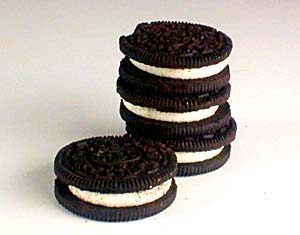
Keep in mind one Oreo-type cookie has about 50 calories. Over-consuming is incredibly easy.

Let’s be brutally honest about the “Get Slim Miracle Diet.” It sounds like a joke, but people actually follow versions of it. The rules are simple, if you can call eating two cups of brown rice, a can of Vienna sausages, and endless onions a “plan.” You stick to this for two months. You jog two miles a day. You hit 1,000 calories daily. You’re in a deficit of roughly 1,200 calories every single day.
The math is cold and unforgiving. It takes about 3,500 calories to burn one pound of fat. So, you lose a pound every three days. Two months? You drop 20 pounds. It feels like magic. It feels like victory.
Then comes the day you stop.
What happens next? You are starving. You’ve been subsisting on rice and fish sticks for sixty days. Your body screams for calories. You eat. A lot. More than you normally would. Then you go back to your baseline habits. The old eating pattern returns. The weight returns. All of it. And likely some extra, because your metabolism has been running on fumes.
This is the brutal cycle that kills most weight loss efforts. You lose the weight. You quit the diet. You gain it back. It’s a revolving door, and you’re stuck inside it.
The Problem with “Diet” Culture
We treat food like an enemy to be defeated, not fuel to be respected. We think sustainable change requires extreme restriction. It doesn’t. In fact, it requires the opposite. You need a plan that doesn’t feel like a sentence. You need to eat normal foods. In normal quantities. As part of a normal life.
If your plan requires you to quit social gatherings, ban entire food groups, or live on sausages and rice, it’s not a lifestyle. It’s a temporary punishment. And punishments don’t last.
Building a Plan That Actually Lasts
Sustainability isn’t about willpower. It’s about design. You need a system that fits into your real life, not one that demands you live in a vacuum. Here’s how to shift from a short-term diet to a long-term health strategy.
1. Focus on Addition, Not Subtraction
Stop counting calories like they’re prison rations. Start adding. Add more vegetables. Add more protein. Add more fiber. When you fill your plate with nutrient-dense foods, you naturally crowd out the empty calories. You get full faster. You stay full longer. You don’t feel deprived.
“You don’t need to eliminate joy to lose weight. You need to make room for it.”
2. Make Movement a Habit, Not a Chore
Jogging two miles a day is great if you love jogging. If you hate it, you won’t do it. Find movement you enjoy. Dance. Swim. Walk while listening to a podcast. Lift weights. The goal is consistency, not intensity. Move your body every day because it feels good, not because you’re punishing yourself for eating a piece of cake.
3. Allow Flexibility
Life happens. You’ll have a wedding. A birthday. A stressful week where takeout is the only option

Knowing Your Numbers
We often hear that consistency is king when it comes to weight management. The reality is that the modern food landscape is literally saturated with calories. Exercise takes time. It takes energy. Building a plan that actually sticks requires more than just good intentions; it requires data.
Start by tracking what you eat. Not guessing. Tracking. You need to know exactly how many calories you consume on a typical day. You also need to build a mental database. When you bite into something, you should know its caloric cost without checking a label.
In the US, packaged foods have nutrition labels mandated by the FDA. Chain restaurants often provide this info in-store or online. Use these tools. Build your awareness.
Calculating Your Baseline
Once you know your intake, determine your need. A simple rule of thumb is 12 calories per pound of ideal body weight. For more precision, you can use metabolic formulas.
Pick the weight you want to maintain. Calculate the daily calories required to stay there.
Now, compare the two numbers. The gap between what you eat and what you need is where the extra weight hides. It is rarely as mysterious as we make it.
Closing the Gap
You might be surprised by how small the number is. 1,600 or 1,800 calories a day doesn’t seem like much once you start counting. You have to watch everything. Every sip. Every crumb.
Exercise helps, but it is not a magic eraser. It raises your limit. Use online calculators to see how many calories different activities burn. Burning 250 to 500 calories a day adds up. It gives you a slightly higher ceiling, but it doesn’t fix a broken diet.
Cutting Calories Without Starving
Reducing intake doesn’t mean suffering. It means being strategic.
- Track everything. Carry an index card. Write down every calorie. The act of writing it down changes your behavior.
- Drop the myths. Don’t believe in “good” or “bad” foods in a moral sense. Focus on energy density.
- Drink water. Liquid calories are a trap. Cola, juice, beer—they add up fast and do nothing to curb hunger. Ten ounces of orange juice is 140 calories. It won’t make you full. An orange is different. You chew it. It takes longer. It fills your stomach. The physical act of eating triggers satiety. Drinking does not.
- Eliminate white sugar. This single move removes cookies, cake, ice cream, soda, and candy. It clears out entire aisles of high-calorie snacks.
- Skip the fryer. Fried foods are calorie bombs. Potato chips, french fries, onion rings, donuts, fried chicken—they are packed with fat. Fat is dense. Eliminate sugar and fried foods, and you eliminate most of the empty calories in the grocery store.
- Choose low-density foods. A cookie is high-density. Two bites and you’ve consumed 100 calories. A banana is low-density. You have to work for it. It takes more bites to reach 100 calories, but it fills you up.
Swap the high-density treats for low-density alternatives. Your stomach will thank you. Your waistline will follow.
The Psychology of Fullness
Why does chewing matter? Because your brain needs time to register satiety. Liquid calories bypass this mechanism. You drink 140 calories of juice. Your brain says, “I had a drink.” You are still hungry. You eat a sandwich. You are full.
An orange triggers three responses: fewer calories, the psychological satisfaction of chewing, and physical fullness. Juice triggers none.
This is not about willpower. It is about physics. And biology.
Where Do You Start?
You don’t have to change everything at once. Start with the index card. Write down what you eat for three days. Just observe.
Then, look at your drinks. Switch to water. See what happens.
Then, cut the sugar.
The changes are small. The results are cumulative. You are not starving. You are simply removing the excess.
It is not complicated. It is just hard to see the forest for the trees. Once you start counting, the forest becomes clear. The trees are just calories. And you hold the calculator.
What will you choose to fuel your body with today?


Think about the math for a second. It’s jarring when you really sit with it.
Most people could knock down a dozen Oreos without blinking. Maybe some SnackWells too. That’s roughly 600 calories vanishing into the void. Now picture trying to eat six bananas in one sitting. You’d feel like you’re going to burst.
Same calories. Completely different experience.
The secret isn’t restriction. It’s density. You need to fill your stomach with foods that take up space but offer few calories. This is volume eating, and it’s the only way to trick your brain into feeling satisfied while you’re actually in a deficit.
Low-Density Foods to Fill the Gap
You want foods that expand in your stomach. Look for natural, low-density options that crowd out the heavy hitters.
- Raw fruits and vegetables: Any of them. They are mostly water and fiber.
- Plain breakfast cereals: Shredded wheat or unsugared flakes work well.
- Rice cakes: Simple, airy, and easy to overeat.
- Unbuttered popcorn: Air-popped is king. Skip the movie theater butter.
- Whole-grain bread: Prioritize high fiber. It keeps you fuller longer.
- Brown rice: Adds bulk without the caloric punch of white rice or oils.
Conversely, steer clear of energy-dense traps. Sugar and fat are calorie bombs. Nuts, most meats, candy, cookies, crackers, potato chips, fried foods, cola, and beer all pack a massive caloric punch into a small volume. If it’s high in sugar or fat, it’s high-density. Avoid it if you want to stay full on fewer calories.
The Wardrobe Check
Here is a weirdly effective psychological hack: ditch the sweats.
Wear form-fitting clothes instead of baggy gym wear. It sounds trivial, but tight clothing acts as a subliminal reminder. When your shirt hugs your ribs or your jeans fit snugly, you are physically reminded of your goals every time you breathe. It keeps the intention present in your body, not just your head.
If you stick to low-density foods and keep your total calories below what you burn, the result is predictable. You lose fat. You maintain weight. It’s physics, not magic.
Making Exercise a Habit, Not a Chore
Exercise isn’t just about burning calories. It’s about increasing the number of calories you burn in a day. But let’s be real: nobody wants to spend two hours in the gym if they can help it.
You need to integrate movement into the cracks of your day.
1. Find Your Non-Negotiable Window
Pick something you can tolerate, or even enjoy. Do it daily. Thirty minutes. Sixty. More. It could be walking. Riding an exercise bike while binge-watching a show. Hitting the gym during your lunch hour. Consistency matters more than intensity right now.
2. Micro-Exercises Add Up
Stop taking the elevator. Take the stairs. Park at the back of the lot. These tiny choices compound. They aren’t workouts, but they keep your metabolism humming.
3. Desk Dumbbells
Keep a set of weights at your desk. Lift three or four times a day while you’re thinking or talking on the phone. It’s not a workout. It’s movement.
4. Get a Partner
Exercise is harder when you’re alone. Find someone to talk to. A partner makes it a routine. It’s harder to skip if someone is waiting for you.
5. Daily Non-Negotiable
Try to move every single day. It’s easier to remember something if it’s already part of your rhythm.
There’s no perfect balance to find. Just keep moving. Keep eating things that take up space. The rest follows.

The Hard Truth About Weight Loss Myths
Let’s cut through the noise. There are dozens of weight-loss myths designed to derail your progress, so let’s look at the most common ones so you can avoid falling for them.
First, stop believing that some calories are “better” than others. A calorie is a calorie. If you eat 1,000 grams of white sugar, that is 4,000 calories. If you eat 444 grams of fat, that is also 4,000 calories. Your body doesn’t care where they come from when it comes to the basic math of energy balance.
Then there is the “low-fat” trap. Just because a package says zero grams of fat doesn’t mean it is safe to eat unlimited amounts. Many fat-free products swap fat for sugar. The result? They often contain just as many, or even more, calories than their full-fat counterparts.
Don’t waste money on passive devices. Acupressure rings, bracelets, or special soaps won’t help you shed pounds. There is only one way to burn calories: you have to actually burn them.
You also need to ignore the aggressive ads promising dramatic results. You will see claims like, “I LOST 54 POUNDS IN 6 WEEKS WITHOUT DIETS OR EXERCISE!!!” or “LOSE 10 POUNDS THIS WEEKEND!” These are lies.
Here is the physics: to lose one pound of fat, you must burn 3,500 calories. To lose 54 pounds in six weeks, you would need to lose 9 pounds every single week. That is 1.3 pounds per day. Losing 1.3 pounds of fat requires a daily deficit of 4,500 calories. The only way to achieve that is to eat nothing and run a marathon (42 kilometers) every day for 42 days. It is impossible. Any rapid weight loss of that magnitude is either dehydration or amputation, not fat loss.
Similarly, beware of claims about “enzyme-driven fat-burning cycles.” Whether it is nettle seeds or apple pectin, no substance creates a miracle cycle that burns calories 24 hours a day.
The Only Rule That Matters
What is actually true is simple. You must eat fewer calories than you burn each day. You can achieve this by eating less, moving more, or doing both.
People are different. Some burn more calories per day than others. It is like height or hair loss—some people just have a different baseline. You need to find out how many calories your specific body burns and consume fewer than that number.
This is not easy. The psychology of food is powerful. It is a mental game. But once you understand the rules, you can play it.
For more on dieting and related topics, check out the links on the next page.