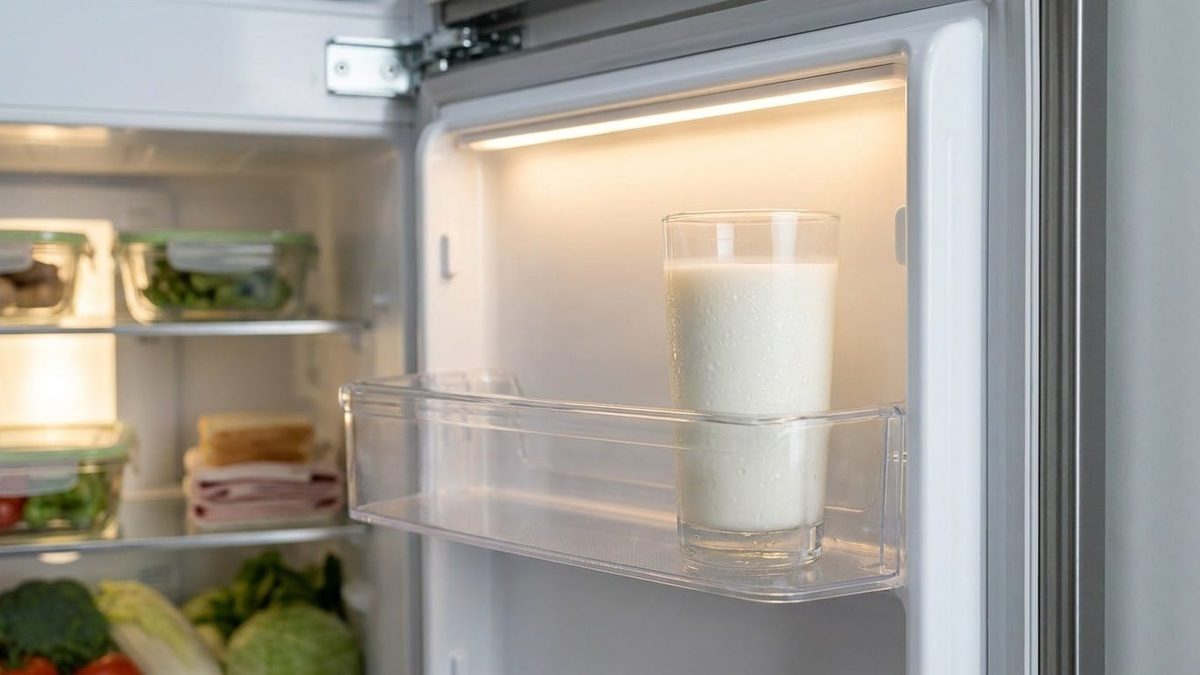
Your fridge door is lying to you.
You see a steady 6 to 7°C. It feels cold. It looks safe. But that number is 2 to 5 degrees warmer than the back of the appliance. That gap isn’t just a minor quirk of design. It is a bacterial playground.
Every time you open that door, you are inviting kitchen air into the machine. The shelves on the door take the brunt of this thermal shock. Five openings a day. That is five times your milk, eggs, and yogurt get a warm hug. And then get chilled down again. Then warmed up. Then chilled.
This cycle doesn’t just soften your butter. It speeds up rancidity. It accelerates bacterial growth. It turns your “safe” zone into a hazard.
The Trap of Convenient Design
Manufacturers know we are lazy. They give us molded slots. Perfect little nooks for eggs. Deep bins for milk cartons. A dedicated spot for the butter tub. It looks organized. It feels tidy.
It is also wrong.
Nutrition and food safety experts call this one of the most common household errors. You aren’t just making a mess. You are compromising your health. The door is the first line of defense against ambient heat. When you open the fridge, hot air rushes in. The door absorbs it. The back of the fridge stays cold. The door fluctuates.
Think about the butter. It softens. It hardens. It softens again. This constant expansion and contraction breaks down the fat structure faster. The flavor turns off. The risk of spoilage goes up.
The same logic applies to everything else you put there.
The Physics of Bacterial Explosion
Here is the part nobody explained to you in school: temperature differences are not linear. They are exponential.
At 4°C, bacterial growth slows down. It hits the brakes. But at 6 or 7°C? The brakes fail. Bacteria multiply much faster. That two-degree difference isn’t just a number. It is a shift in kinetics. It is the difference between food that lasts and food that hurts.
Raw meat is the biggest risk. If you leave raw chicken in the door at 8°C instead of 2°C on the bottom shelf, its shelf life drops by half. Maybe two-thirds. You are playing Russian roulette with your dinner. Salmonella enterica and Listeria monocytogenes don’t care about your schedule. They thrive in the warmth. A raw chicken sitting in the door can become dangerous before the “use-by” date even arrives.
The Correct Fridge Map
Stop guessing. Start mapping.
Your fridge is a gradient. The coldest spot is at the very bottom, just above the crisper drawer. This area hovers around 0 to 2°C. This is the high-security zone. This is where raw meats and fish go. This is where vacuum-sealed charcuterie belongs. Keep it low. Keep it cold.
The middle shelves sit around 4°C. This is the standard zone. Put your cooked meats, ready-to-eat meals, and hard cheeses here.
Now. Look at the door.
This is not for milk. Not for eggs. Not for opened yogurt. These items need stability. The door gives them chaos.
The door is for the sturdy. The resilient. The high-acid or high-sugar items. Condiments live here. Pickles. Jams. Bottled drinks. Mustard. Ketchup. These things can handle the temperature swings because their chemical composition protects them. Salt. Sugar. Vinegar. Preservatives. They don’t spoil easily.
The rules are simple. And they are backed by science, not opinion.
Move the milk to the middle shelf. Move the eggs to the main body, not the door bin. Keep your raw meat on the bottom. Reserve the door for the things that don’t mind a little warmth.
It takes five seconds to rearrange your shelves. It might save you a trip to the urgent care clinic. Or it might just make your butter taste better.
But that door? It’s still lying to you.
Where you actually store food matters more than you think
It isn’t just about forgetting to buy milk. The real enemy is usually the wrong shelf.
A study by Sofres points to a harsh truth: most food waste comes from poor fridge management. There is a direct link between where you put a yogurt and how long it actually survives. You probably haven’t measured it. But the numbers don’t lie.
In France, 10 million tonnes of food are wasted annually. More than 1.2 million tonnes of that is still edible. That translates to over 20 kg thrown away per person each year. For an average household, that is a silent leak of 500 to 1,500 euros annually. You are literally throwing money into the bin. And the fridge door often takes the blame.
The door is a dangerous place
Health authorities warn against frequent or prolonged door openings. This is basic hygiene 101. But it becomes critical when you store temperature-sensitive items there.
The cold chain relies on consistency. The fridge door is the least consistent zone. Every time you open it, warm air rushes in. Cycles of heat and cold follow. This fluctuation is the enemy of longevity.
If you put eggs or open juice on the door, they degrade faster. The temperature there is rarely stable. It depends on how often you look inside. It depends on the ambient temperature of your kitchen. It is a volatile environment.
How to find the coldest zone in your fridge
New fridges are not created equal. Since 2002, labeling rules indicate the coldest area. Look for the snowflake symbol. Or check for a “freshness zone” label.
But here is the catch. The coldest spot varies by model. In some units, it is at the top. In others, it is at the bottom. It depends on where the vents are positioned. Airflow is everything.
Do not guess. Read the manual. Or better yet, test it.
A kitchen thermometer costs about ten euros. It is the cheapest insurance you will buy all year. Place it on different shelves. Wait 24 hours. Map your fridge.
Once you know where the cold is, move your sensitive foods there. Meat. Dairy. Leftovers. Keep the door for condiments and jars that can handle some temperature swing.
The result? Less waste. Less guilt. More money in your pocket. It sounds simple. But most people never bother to look.
Your fridge is not a black box. It has logic. You just have to learn it.