


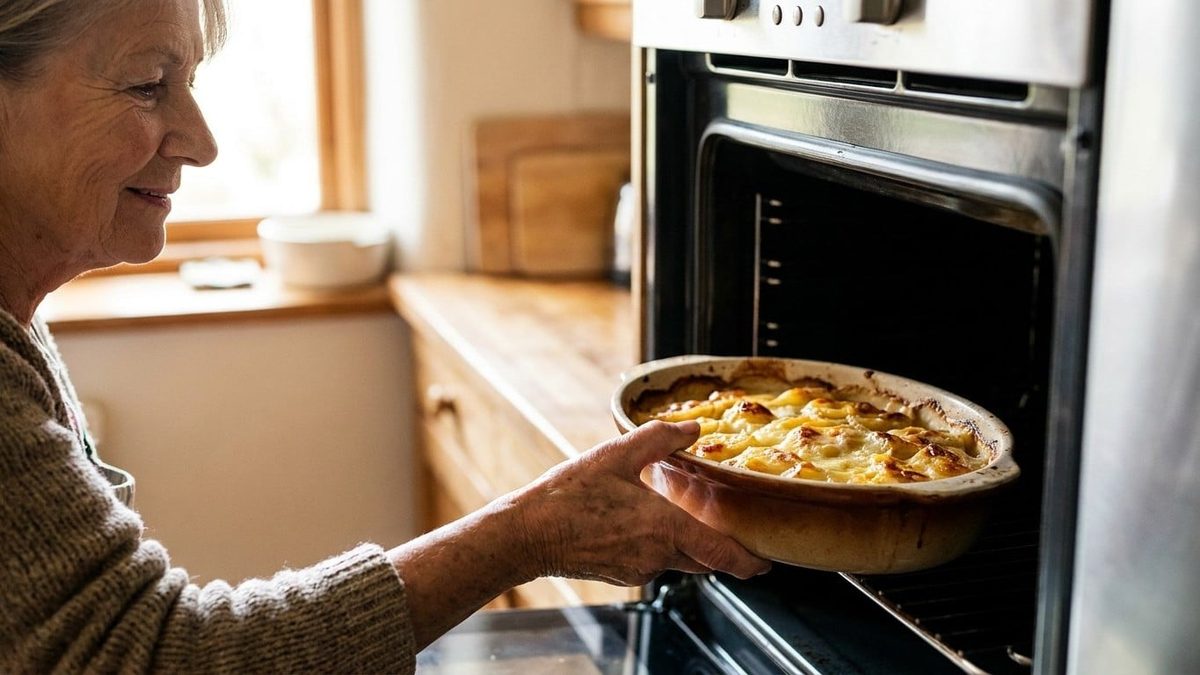
She didn’t offer a lecture. She didn’t cite a study. She just looked at the empty, roaring oven and said no. The gratin dauphinois sat waiting on the counter. She had been cooking for forty years. Her authority was quiet but absolute. Physics and agronomy agree with her. Common sense does too.
We preheat our ovens like it’s a sacred ritual. Turn the dial. Wait for the beep. Slide the tray in. It is a reflex inherited from French tradition. We do it without thinking. But for most daily meals, this is wasted energy. It is sometimes even counter-productive.
“If the cooking time exceeds 45 minutes, preheating is often unnecessary.”
The goal of preheating is stability. You want the oven walls hot and the resistors stable before the food hits the rack. The first minutes of an oven cycle are chaotic. That instability justifies waiting. Only sometimes. For the vast majority of dishes, this requirement simply does not exist.
Consider a gratin dauphinois. It cooks for an hour and a half. The first ten minutes are cold. It changes nothing. The oven catches up on its own. The potatoes begin to melt slowly. They do not burn. They do not dry out. Starting cold allows for a progressive temperature rise. This is gentle. It is ideal for creamy dishes.
The Cost of Empty Heat
An oven is one of the most energy-hungry appliances in the home. Heating empty air for ten to fifteen minutes is pure waste. Do the math. At 200°C, you are burning nearly 0.2 kWh every ten minutes. That number adds up over a year.
Skipping unnecessary preheating saves between 15% and 20% of energy per dish. ADEME estimates an electric oven consumes 146 kWh annually for 187 cycles. Removing useless preheating cuts into that total. There is no culinary sacrifice. You get the same meal. You just save money.
There is another trick. Turn the oven off a few minutes before the end time. Residual heat finishes the job. This works especially well for slow-cooked dishes and cakes. Combine this with skipping the preheat. You double your savings on a single cycle.
When You Actually Need the Heat
Not every dish benefits from a cold start. Some preparations demand immediate high heat. A dough needs to expand quickly. Egg whites must set fast. A crust must form instantly. If the oven is warm instead of hot, everything happens too slowly. The texture suffers.
Preheating is essential for pastries, bread, pizza, and soufflés. These require precision from the first second. Bread is a special case. Even with long cook times, it needs high initial heat. This develops the crust and volume. Without it, the crumb stays dense. Croissants. Brioche. Cheese soufflés. These demand the energy of a hot start.
Why do we ignore this rule? Packaging lies. Manufacturers often list preheating instructions. It is either excessive caution or editorial habit. Many frozen lasagnes cook perfectly in a cold oven. You just adjust the time slightly. “Preheat to 200°C” is not a scientific law. It is a convention.
The reflex to preheat is misleading. It is time to unlearn it. For everything else, let the oven warm up with the food inside.
How to Bake Without Preheating Your Oven
Stop waiting for the signal. You don’t need to rewrite your entire cooking process to save energy. The golden rule is simple. Add ten minutes to the standard recipe time. This buffer accounts for the oven’s warm-up phase. The heat distributes evenly on its own. You get the same result. Just slower.
If you’re using cold ceramic or glass, the dish will suck up some initial heat. Add five to ten extra minutes to the clock. It’s not magic. It’s physics. Your oven works harder at the start. But once it hits cruising speed, it balances out.
This matters more than you think. Cooking consumes 7.8% of a French household’s electricity. That’s a significant chunk of your bill and your carbon footprint. Every minute saved counts.
Consider your food. Does it need immediate high heat to rise? To form a crust instantly? If the answer is no, put the dish in cold. Wait for the heat to catch up. It’s not laziness. It’s efficiency.
Which Dishes Work Best for Cold Start Cooking
Not everything survives the cold start. You need to know what holds up.
- Stews and braises: Low and slow. These benefit from the gradual rise.
- Casseroles: Cheese and layers melt nicely without burning the top first.
- Large roasts: Meat benefits from even heat distribution.
- Breads with yeast: Some can handle it, but check the recipe.
Avoid delicate pastries that rely on a shock of heat to puff up. Meringues? Skip it. They need that instant temperature spike. But for dinner? You’re good.
Why Your Oven’s Temperature Might Be Tricky
Some ovens run hot. They dry out food fast. If yours does, starting cold is almost a feature. The longer bake time prevents the outside from charring while the inside cooks through. You get moist results. Dry heat gets a chance to work gently.
If your oven runs cold, you might need the extra time. Test it. Watch your food. Adjust.
The goal isn’t perfection. It’s practicality. You’re saving energy. You’re simplifying your routine. You’re not compromising on flavor. Just on waiting.
So next time, skip the preheat. Put the dish in. Set the timer. Add ten minutes. Eat well. Save money.