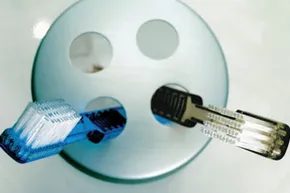
I know it needs brushing. This is the non-negotiable foundation of oral health. But there’s one thing no one talks about. But here is the thing nobody talks about: your toothbrush itself is filthy. It’s a sponge for plaque, food particles, saliva, blood, toothpaste residues, etc.
The American Dental Association recommends replacing them every three to four months.
Even if you are diligent about disinfecting, it can take too long to prevent contamination.
Remember that the brush may be dirty when you get it home. Not sold in sterile packaging.
Bacteria are probably waiting for you in Turkey even before you put toothpaste on it.
So should you disinfect your brushes? The short answer is “no”. The long answer is complicated.
Is it really necessary to disinfect the toothbrush?
The thought of brushing your teeth with contaminated tools makes you feel sick. But there is good news. Current public health research does not link the use of “dirty” toothbrushes to oral recontamination, oral infections, or other adverse health effects. Your body is already full of defenses. The skin and mucous membranes act as a barrier. Antibodies fight against invaders. They are often exposed to micro-organisms, but they are usually fine.
The ADA and the Centers for Disease Control and Prevention both agree. The average person does not need to disinfect toothbrushes. In fact, it can be harmful.
“Disinfecting is not only pointless, it can also be harmful.”
Why is it harmful? Cross contamination. Dipping multiple toothbrushes into the same cup of sanitizer can spread bacteria back and forth between the handles. It’s a germy loop. Plus, aggressive cleaning methods can damage the bristles. If the tips of the bristles are curved, the cleaning power is reduced. This defeats the whole purpose.
There is one exception. It is people with a weakened immune system. Take special precautions if your body’s defenses are weakened. Keep your brushes clean. For everyone else? You’re likely overthinking it.
The natural way to stay clean (no tools required)
You don’t need to buy a special UV sterilization device or effervescent tablets. You can maintain good toothbrush hygiene in simple, low-tech ways.
** Rinse thoroughly. ** Rinse thoroughly with water after brushing. Wash off any residue.
**Store upright. ** Allow to dry. Bacteria love moisture. Thanks to the vertical position, the bristles dry between uses. If there are multiple brushes in the holder, make sure they are not touching. Keep them separate.
**Avoid closed cabinets. ** Do not store the toothbrush in a box or closed cabinet. Dark, moist environments are breeding grounds. Air circulation is required.
** Watch the bristles. **Check your brushes regularly. If the bristles are worn, replace them. If your brushes look worn, don’t wait until they are 3-4 months old. This is especially true for children’s toothbrushes. Children’s toothbrushes often need to be replaced earlier than adult toothbrushes because they wear out as a result of more vigorous (or irregular) brushing.
Disinfection vs. Sanitization vs. Sterilization
These terms can be misleading when purchasing cleaning products.
- Disinfection is designed to remove microorganisms that cause different degrees of disease.
- Disinfecting means reducing 99.9% of bacteria.
- Sterilization destroys all living things.
Here’s the problem. Commercial toothbrush cleaners have not been proven to disinfect toothbrushes. True sterility cannot be achieved at home. As mentioned earlier, you don’t have to do this.
DIY cleaning method
If you still want to do a little more (or maybe you’re just grossed out by the thought of dirty brushes), there’s a way to do it that doesn’t require buying special tools.
**Soak in mouthwash. ** Dip the brush head in antibacterial mouthwash. It’s very simple. Daily maintenance is enough.
Freeze or boil. Yes, you can freeze your toothbrush. You can also boil it. These methods kill bacteria.
**dishwasher. ** The toothbrush can be placed on the top shelf of the automatic dishwasher. Heat and detergent will take care of it.
But before you boil water or freeze plastic handles, read the fine print. Heat and strong UV rays can damage hair. Damaged bristles don’t clean as well. It is not effective in removing plaque. So you can boil the brush, but you can sacrifice performance.
Conclusion
For most people, the best “disinfection” is good hygiene. rinse. dry. Store upright. Replace when worn. Your immune system is strong. Your mouth is resilient. You don’t need a UV light box to stay healthy.
But if your immune system is weak or the thought of dirty brushes keeps you up at night, it’s time to take action. At this point, be careful not to damage the brush. A worn brush is worse than a lightly soiled brush.
There is no perfect balance. There is just what works for your body and your routine. In some cases, this step can be as simple as letting the brush air dry.